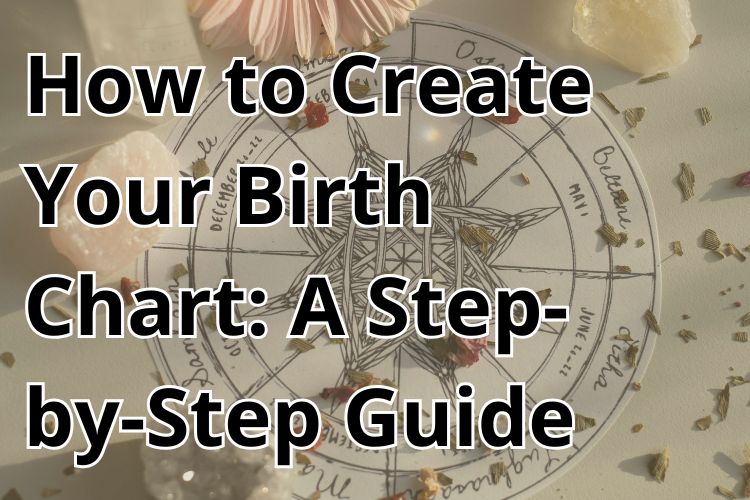
Discovering your birth chart is like opening a cosmic blueprint of your life. It’s an astrological map created from the exact positions of the planets at the moment and place you were born. Your birth chart holds the key to understanding your personality, strengths, challenges, and even your life purpose. Whether you’re new to astrology or looking to deepen your knowledge, this guide will walk you through creating your own birth chart while offering a richer experience of the process.
Step 1: Gather Your Birth Information
Your birth chart relies on precise data to map the planetary positions accurately. To get started, you’ll need:
- Date of Birth: The foundation of your chart.
- Time of Birth: Accuracy matters! Even a 5-minute difference can shift the placements, so try to find the exact time. Check your birth certificate or ask family members if you’re unsure.
- Place of Birth: The location is crucial for calculating planetary positions relative to the Earth’s horizon at the time of your birth.
Tip: If you don’t have your exact birth time, you can still create a “solar chart” using your birth date. While it’s less detailed, it’s still a valuable tool for understanding your astrological tendencies.

Step 2: Set Up the Chart Structure
If you’re a hands-on learner, creating your chart manually can be a rewarding experience.
- Draw a Circle: On a piece of paper, sketch a large circle and divide it into 12 equal segments, like a pie. These represent the 12 astrological houses.
- Label the Houses: Each house governs a specific life area, such as career, relationships, or personal growth. For example:
- 1st House: Self and appearance
- 2nd House: Finances and values
- 7th House: Partnerships and relationships
- Add the Zodiac Signs: Around the outer edge of the circle, write the 12 zodiac signs in order, starting with Aries.
Alternatively, you can use online tools or apps like Astro.com or Cafe Astrology for a digital version.
Insight: Think of the chart as a wheel of life. Each house and sign reveals unique cosmic influences on various aspects of your journey.
Step 3: Identify Your Big Three
In astrology, the “Big Three” form the foundation of your personality. These are your Sun, Moon, and Rising signs, and they offer a quick snapshot of who you are:
- Sun Sign: Represents your essence, ego, and life purpose. It’s the zodiac sign you’re most familiar with and reflects your core identity.
- Moon Sign: Symbolizes your inner world, emotions, and subconscious. It reveals what you need to feel emotionally fulfilled.
- Rising Sign (Ascendant): The zodiac sign on the eastern horizon at your birth. It shapes your outward personality and the impression you leave on others.
For example, a person with a Leo Sun, Scorpio Moon, and Taurus Rising might have a charismatic core, intense emotions, and a grounded presence.
Activity: Reflect on how your Big Three resonate with your self-perception. Are there surprises, or do they align with what you already know about yourself?our public face.

Step 4: Explore the Planetary Placements
The planets in your chart reveal different facets of your personality and life themes. Each planet governs specific energies:
- Mercury: Communication and thought processes.
- Venus: Love, beauty, and values.
- Mars: Drive, ambition, and passion.
- Jupiter: Luck, expansion, and wisdom.
- Saturn: Discipline, challenges, and structure.
- Uranus: Innovation and change.
- Neptune: Dreams, intuition, and spirituality.
- Pluto: Transformation and power.
Example: If Venus is in Libra in the 7th house, you may value harmony in relationships and thrive in partnerships where balance and beauty play a key role.
Each planet’s placement within a house and sign adds unique layers to your personality.tive, curious nature.

Step 5: Understand Aspects
Aspects are the angles planets form with each other in your chart. They shape how planetary energies interact and influence your experiences.
- Conjunctions (0°): Amplify and unify planetary energies.
- Squares (90°): Create tension that challenges you to grow.
- Trines (120°): Bring harmony and ease.
- Oppositions (180°): Represent duality and the need for balance.
Example: A trine between Mercury and Jupiter might indicate natural talents in communication and teaching, while a square between Mars and Saturn could signify challenges in balancing ambition with discipline.
These aspects form the narrative of your life, showing where you may face obstacles or enjoy effortless success. personality.
Step 6: Dive Deeper with the Houses
Each of the 12 houses represents a specific area of your life. For instance:
- 1st House: Self, identity, and appearance.
- 7th House: Partnerships, love, and marriage.
- 10th House: Career, reputation, and achievements.
Activity: Focus on your Rising sign, which rules your 1st house. What does this placement say about how you present yourself to the world?

Step 7: Reflect and Apply
Your birth chart is more than just a collection of planetary placements—it’s a tool for self-awareness. Use it to reflect on your strengths, challenges, and life patterns.
- Are there recurring themes or lessons in your chart?
- How can you use this knowledge to grow and navigate challenges?
Tip: Journaling your observations can help deepen your connection to your chart. You might even revisit it over time as new insights emerge.
Common Questions About Birth Charts
1. Can I create a birth chart without knowing my exact time of birth?
Yes! You can create a “solar chart” based on your birth date. It won’t include your Rising sign or precise house placements but still provides valuable insights.
2. What if my chart feels overwhelming?
Take it step by step. Focus on your Big Three first, then explore the planets and aspects gradually.
3. How do I interpret challenging placements or aspects?
Remember, challenges in your chart represent opportunities for growth. A square or opposition isn’t a limitation—it’s a chance to develop resilience and wisdom.
The Joy of Exploring Your Birth Chart
Creating your birth chart is like unfolding a treasure map. Each placement, aspect, and house adds a piece to the puzzle of who you are. It’s a journey of self-discovery that not only deepens your understanding of astrology but also enhances your relationship with yourself.
Curious to explore your birth chart further? Visit my blog for detailed insights, astrology tools, and tips for interpreting your chart.

Share your experience in the comments—what did you learn about yourself from creating your chart? Let’s decode the cosmos together!
For more tips and predictions, read more on my blog!
How to Find Your Astrological Houses: Discover Your Personal Chart
The Astrological Houses: Your Guide to the 12 Unique Realms of Life
Birth Chart Secrets Revealed: What July’s Transits Unlock in Your Natal Planets
How to Use Your Birth Chart to Manifest Love
Birth Chart Basics: What Each Planet in Your Chart Really Means





Leave a Reply